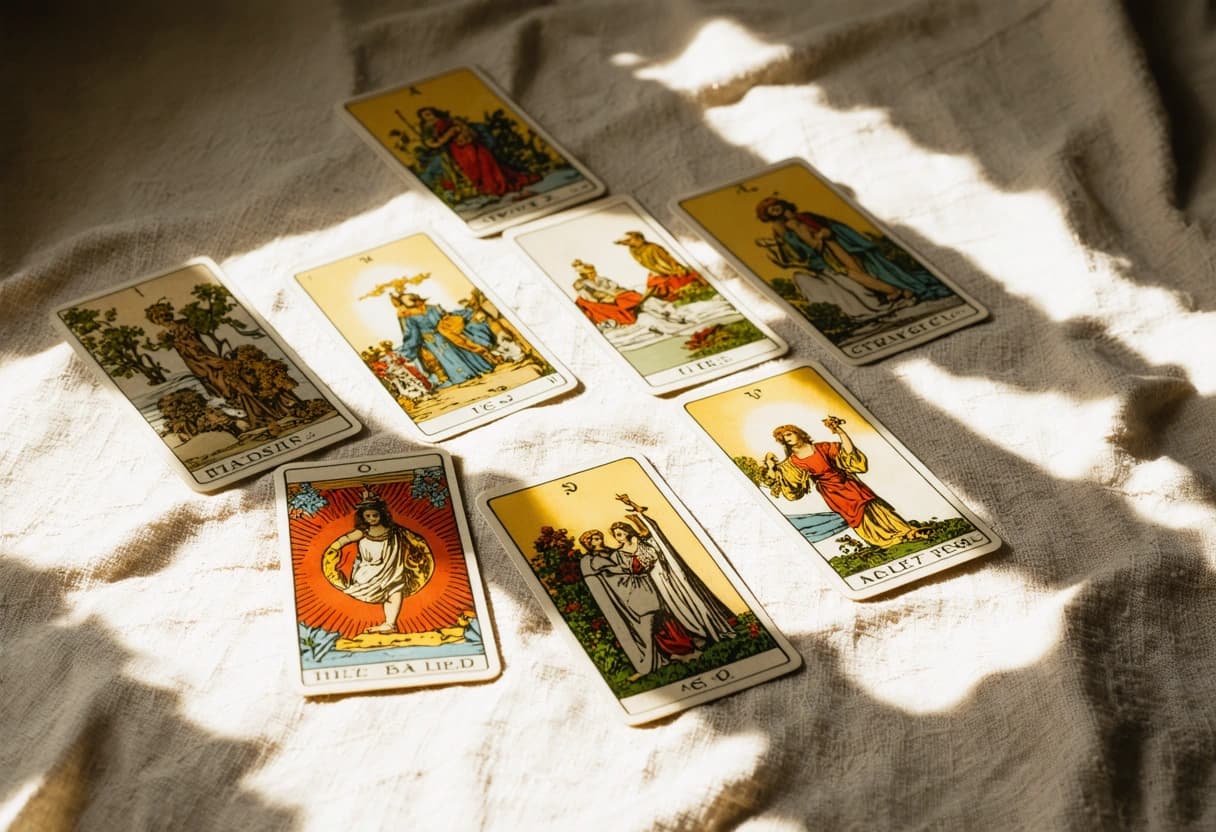
Rune readings with professional runologists
Runes are a sacred Norse alphabet used for divination since antiquity. On Espace Voyance, consult runologists who cast Futhark runes to shed light on your questions.

What is a rune reading?
Runes are the characters of ancient Germanic alphabets, the best known being the Elder Futhark (24 runes). Each rune has a name, a symbol, and an archetypal meaning — Fehu (abundance), Uruz (raw strength), Ansuz (communication, inspiration), Wunjo (joy). The runologist places the runes in a pouch, mixes them, draws a number of them and interprets them by position (upright or reversed) and relationship. The runic tradition is close to tarot's but grounded in a distinctly Norse pagan worldview.
When to consult a runologist
Runes suit clients looking for an archetypal, direct answer, often tinged with a warrior-like energy — they're rawer than tarot. Particularly well-suited to questions of determination, inner strength, decisive choice.
How the session works
You ask your question. The runologist typically draws 1, 3, or 5 runes and interprets them. The reading is often quick and direct, using archetypal language. Via chat or phone.
Frequently asked questions
How many runes are in the Futhark?▾
The Elder Futhark has 24 runes, the Younger Futhark 16, and the Anglo-Saxon Futhorc 29-33 depending on the variant.
Can runes be reversed?▾
Yes, like in tarot, a rune drawn upside down modifies or reverses its meaning. Some symmetric runes cannot be reversed.
What's the difference with tarot?▾
Runes are more archetypal and direct. Tarot is more narrative and iconographic. The two complement each other.
Can I learn to cast runes myself?▾
Yes, it's an accessible practice. But fine interpretation requires knowledge of Norse mythology and the symbolism of each rune.
How much does a session cost?▾
Per-minute rate set by the runologist (minimum €0.50/min). The reading is often quick: 15-20 minutes is usually enough.
Related specialties
Other practices that might answer your question.
Related terms
Useful definitions to better understand this practice.